HH46 Passage Report
Hong Kong to Singapore Passage Report
Aboard MaHooligan — HH46OC-16 April 25 – May 5, 2026
Report Date: May 11, 2026
Author: Douglas Gonda, Owner — HH46-SC-23
WEATHER AND CONDITIONS
Over the ten-day passage we experienced predominantly hot, sunny subtropical and tropical conditions. The few squalls encountered were brief and generally passed around us rather than directly through our course line.
Wind conditions ranged from occasional calms to periods exceeding 25 knots. Most of the passage was sailed on a broad reach, with tighter reaching angles during the first days at sea. Sea states were generally moderate, with waves typically 1–2 meters and occasional seas exceeding 3 meters. Waves and currents were most often from aft or on the beam.
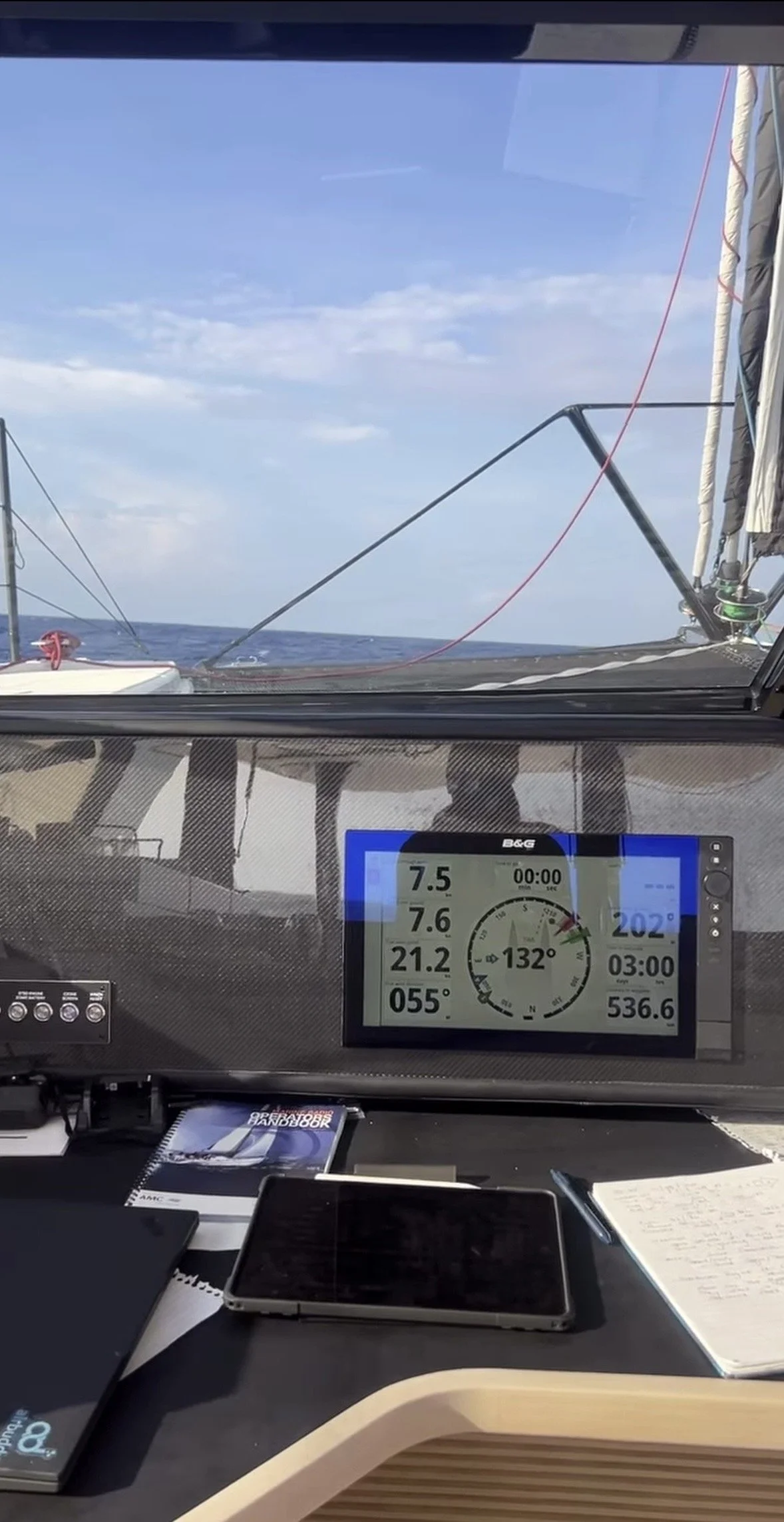
The vessel’s speed sensor was clearly not calibrated correctly; therefore, some recorded boat- speed and current data were unreliable.
During the final 48 hours approaching Singapore, at latitudes below approximately 4° North, we encountered prolonged calms. As a result, all sails were dropped and the vessel proceeded under power.
CREW
MaHooligan Owner
Delivery Skipper
Myself, DG. I was contacted several weeks prior to the handover of MaHooligan in Xiamen, China, by the owner, inviting me to join this maiden offshore passage aboard the first HH46. It provided an excellent opportunity to learn and evaluate the boat, its systems, and the design evolution of the HH platform over an extended offshore passage.
PASSAGE DETAILS
Departure: Aqua Hub, Hong Kong — April 25, 2026, 9:30 AM
Conditions at Departure: 74°F, ~8 knots wind
Arrival: ONE°15 Marina, Singapore — May 5, 2026, 5:00 AM
Conditions at Arrival: 80°F, clear skies, calm
Distance Covered: Approximately 1,500 nautical miles
Elapsed Time: 9 days, 19 hours, 30 minutes (dock-to-dock)
Average Speed: Approximately 6.4 knots
Details:
Typical sailing speeds ranged between 7–8 knots, with a recorded top speed of 10.5 knots.
Under power or while motor-sailing, speeds were generally between 5.5 and 6.5 knots on a single engine at RPMs ranging from approximately 2300–2750.
During the final six hours approaching Singapore, speeds were intentionally reduced to approximately 4.5 knots due to darkness and exceptionally heavy commercial shipping traffic.
GENERAL IMPRESSIONS
Quality and attention to detail are evident throughout this catamaran. Significant refinements and improvements have clearly been made over earlier HH44 models. Bravo to the HH team!
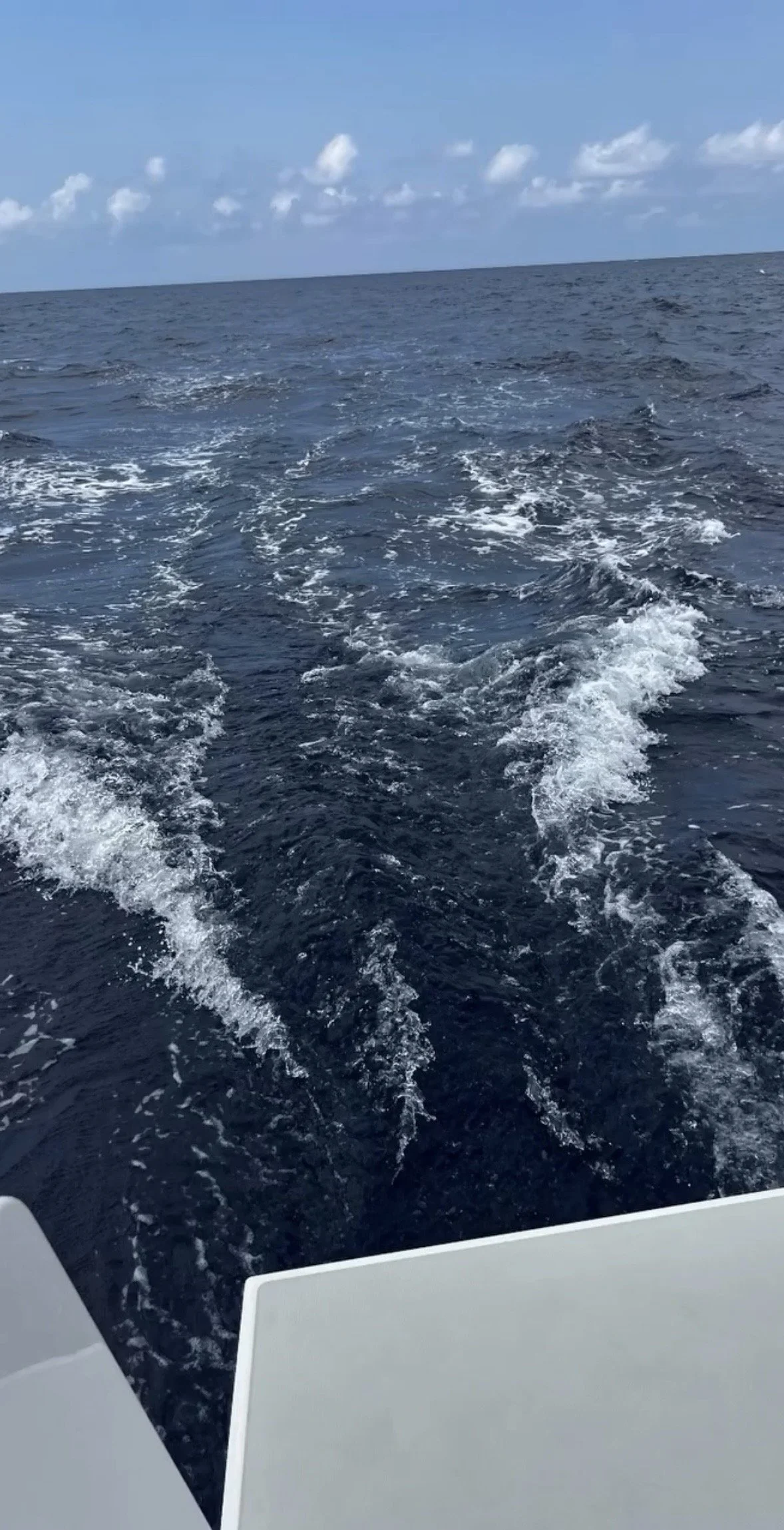
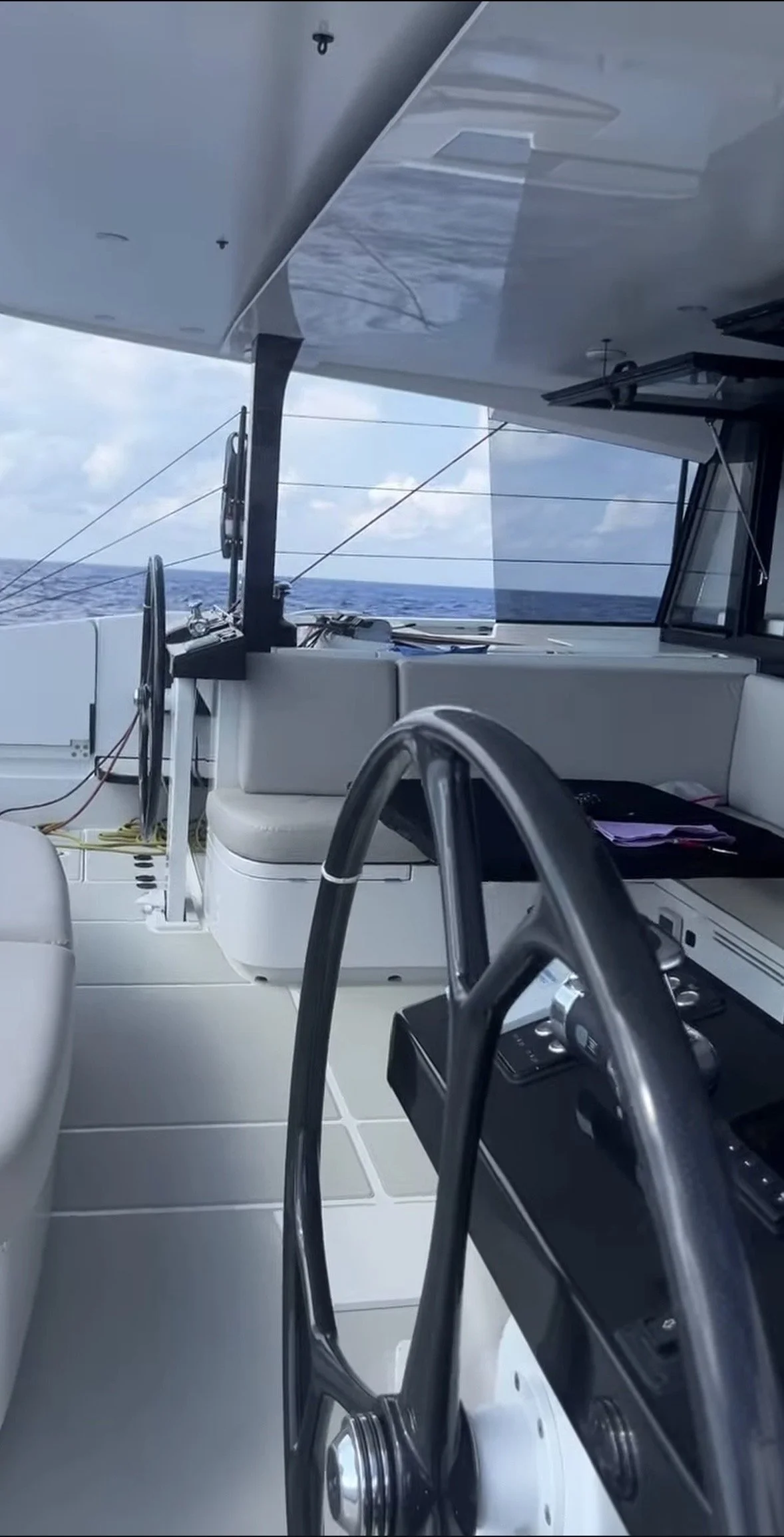
The wake generated by the new stern extensions appeared clean and smooth, with no obvious excessive turbulence. The new high-aspect rudders worked exceptionally well with the autopilot. In following seas and moderate winds, wheel corrections were generally limited to approximately 3–5 degrees. Hand steering felt very light — perhaps even slightly too light for my personal preference.
The Beta 38 diesels paired with 18-inch Gori props pushed the HH46 comfortably above 8 knots when running both engines at approximately 2750–2900 RPM. Estimated diesel consumption while motor-sailing on a single engine appeared to be roughly 2.5–3.0 liters per hour.
The onboard systems generally performed very well. Solar output regularly exceeded 1,500 watts while sailing, with these production levels sustained from mid-morning through late afternoon. Overall, this proved to be a very comfortable and enjoyable platform for three people during a ten-day offshore passage.
It should be noted that the vessel was heavily loaded for this trip, carrying:
Full diesel and water tanks
Sixteen additional 5-gallon diesel jugs
Approximately 64 liters of emergency water
Extensive spare parts, tools, and provisions
Under stronger winds and confused seas, the boat exhibited some hobby-horsing. However, it was substantially less pronounced than what I previously observed aboard HH44-02 and HH44- 04.
SAILING PERFORMANCE
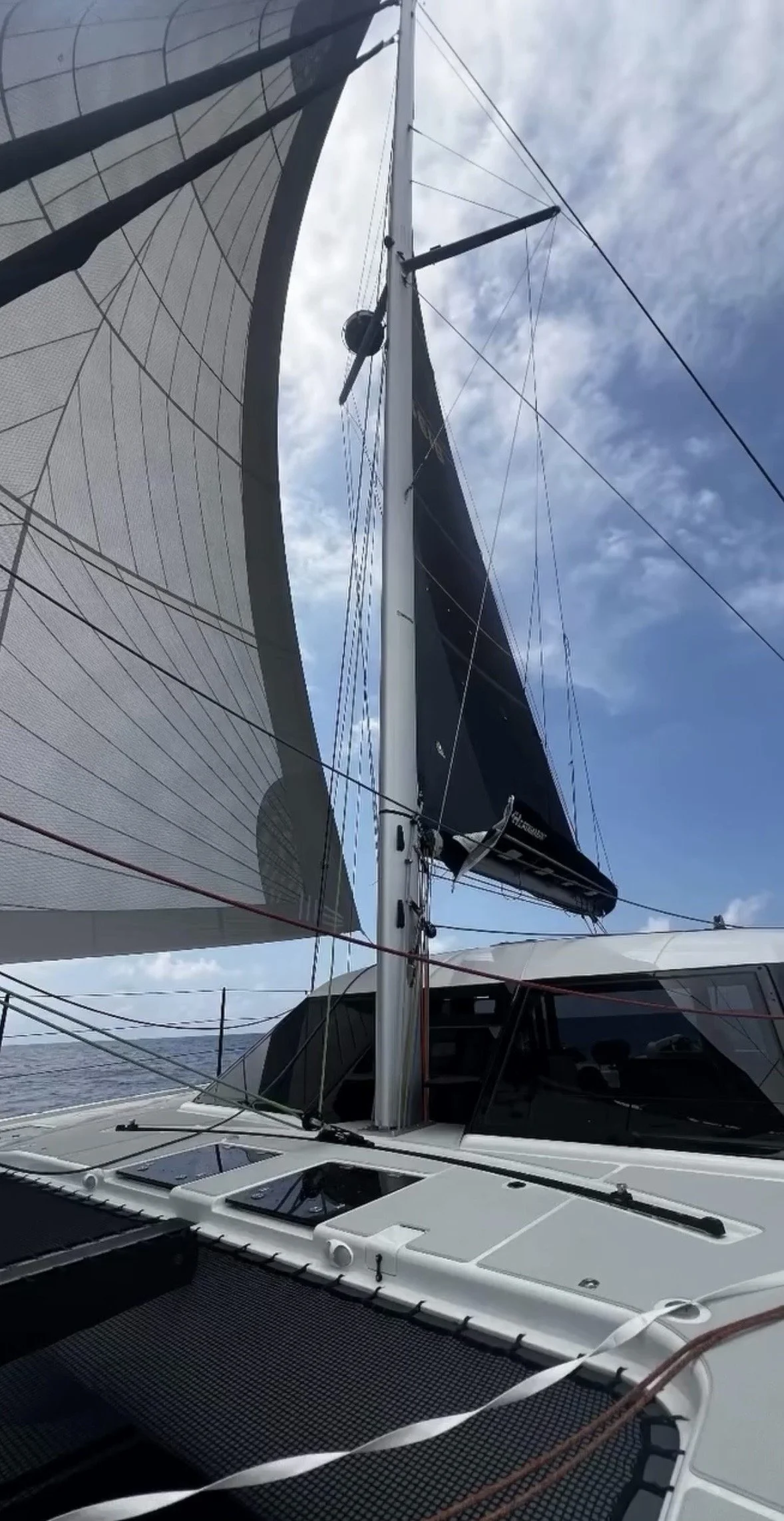
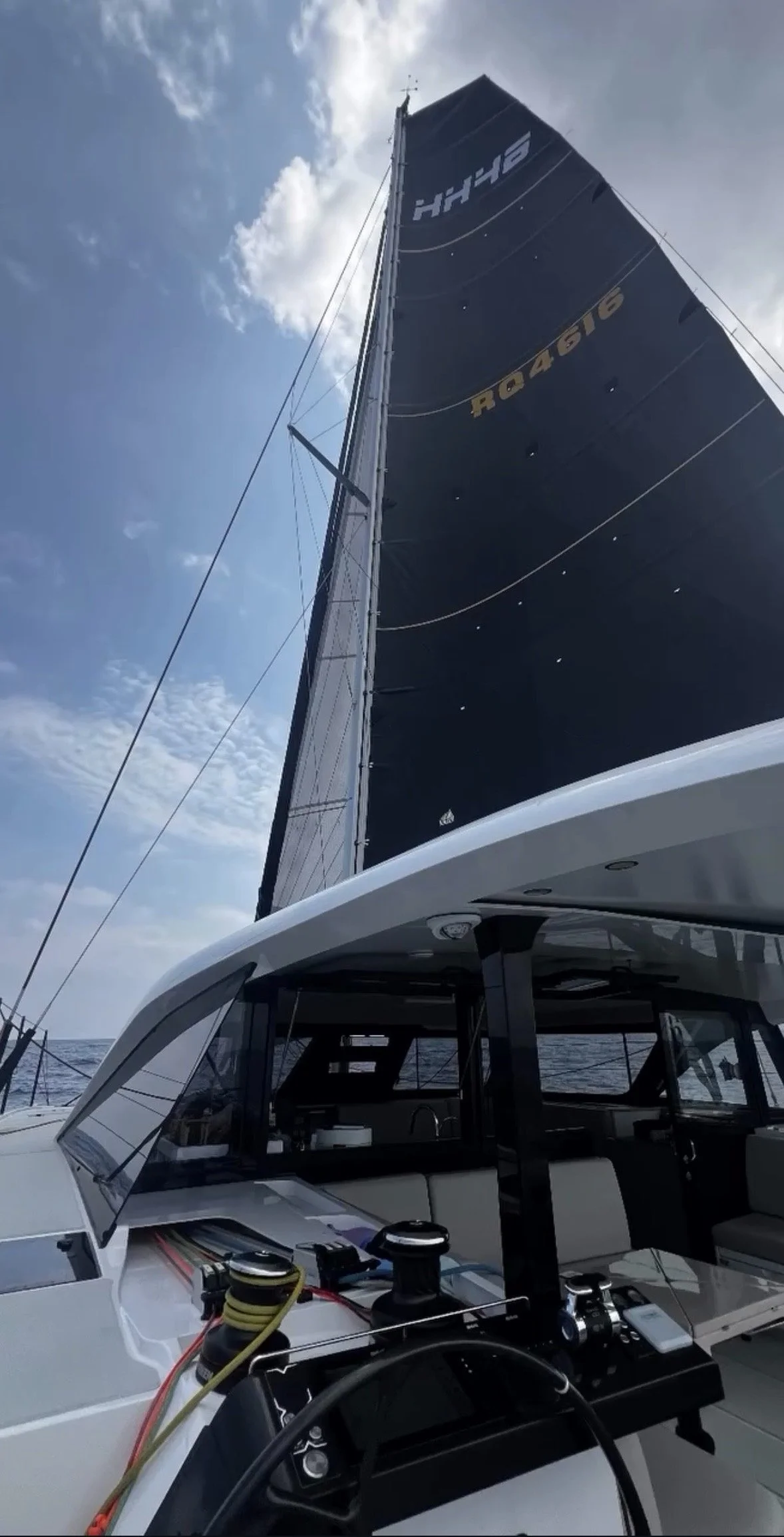
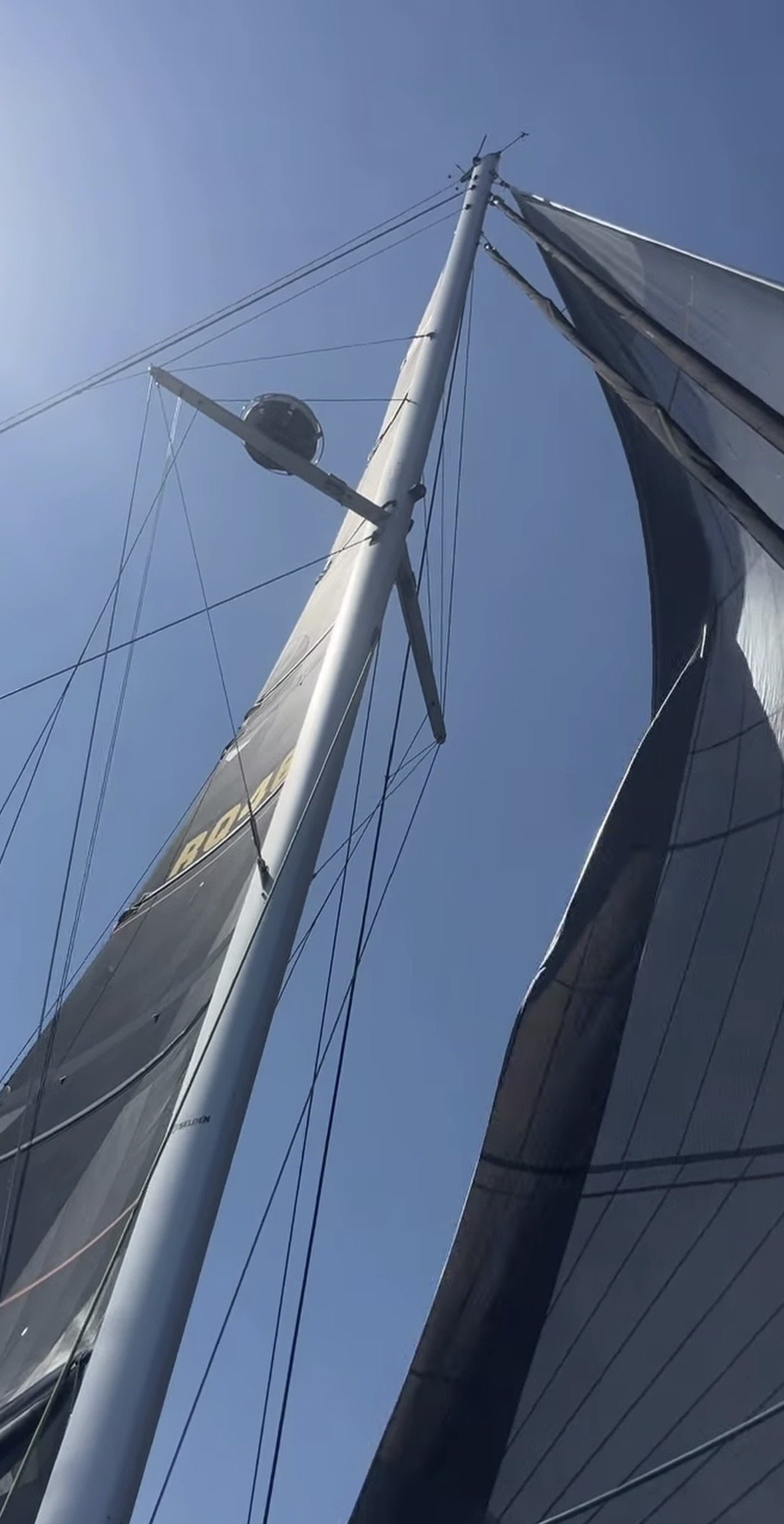
MaHooligan was sailed conservatively throughout the voyage using Doyle Performance Cruise sails. Performance was good all things considered.
Most sailing occurred at true wind angles between approximately 100° and 145°. The mainsail was typically carried with one reef, and at times with two reefs.
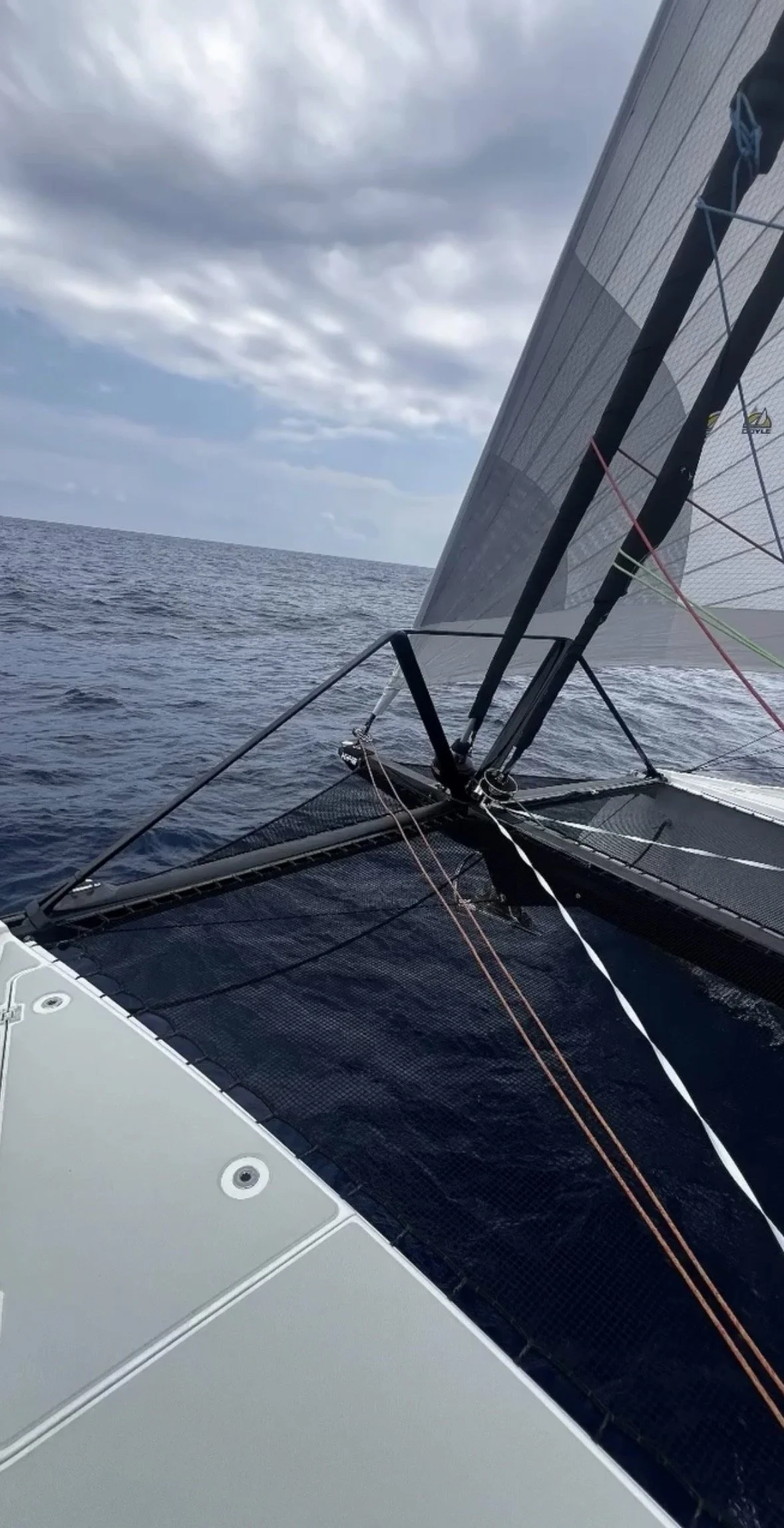
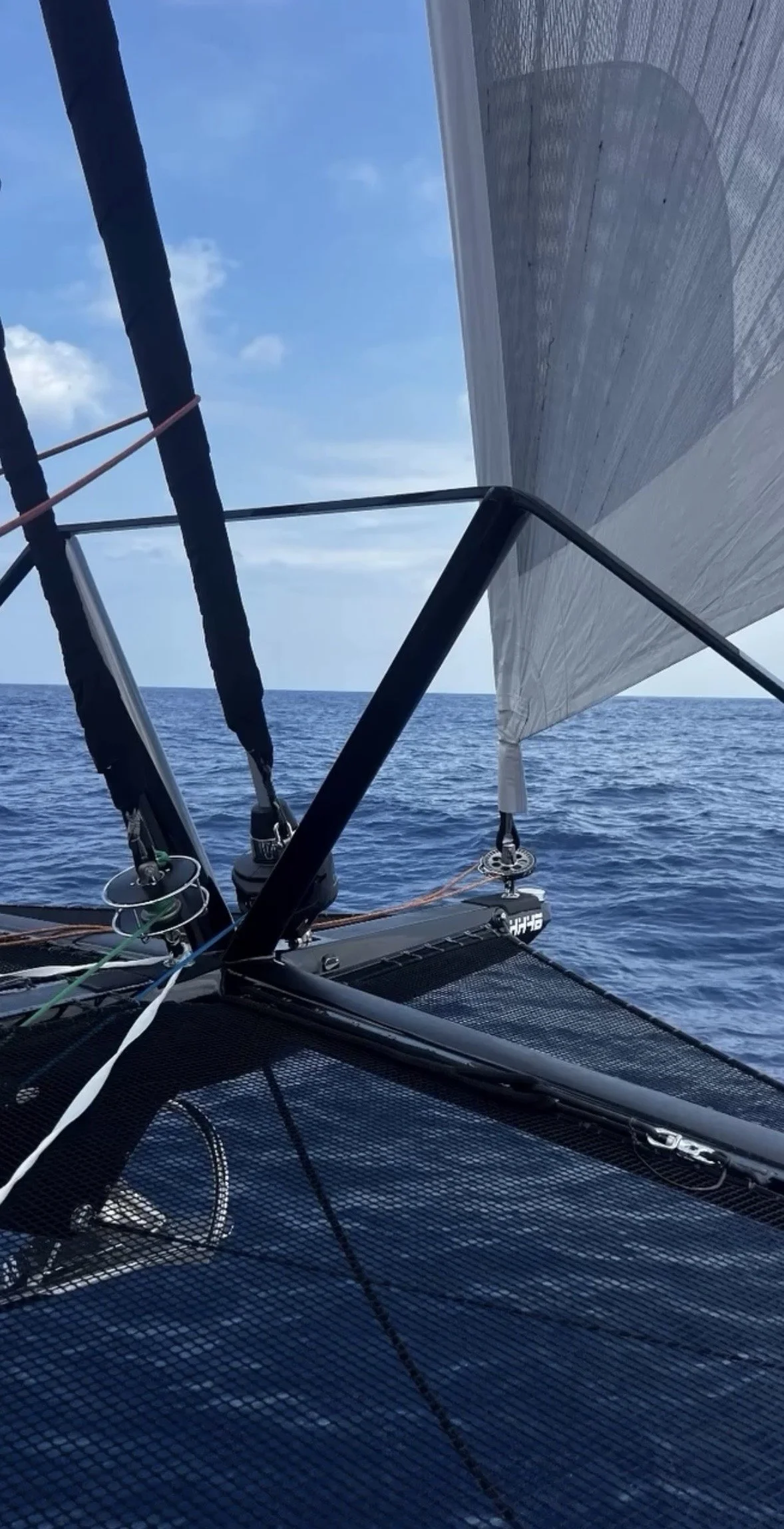
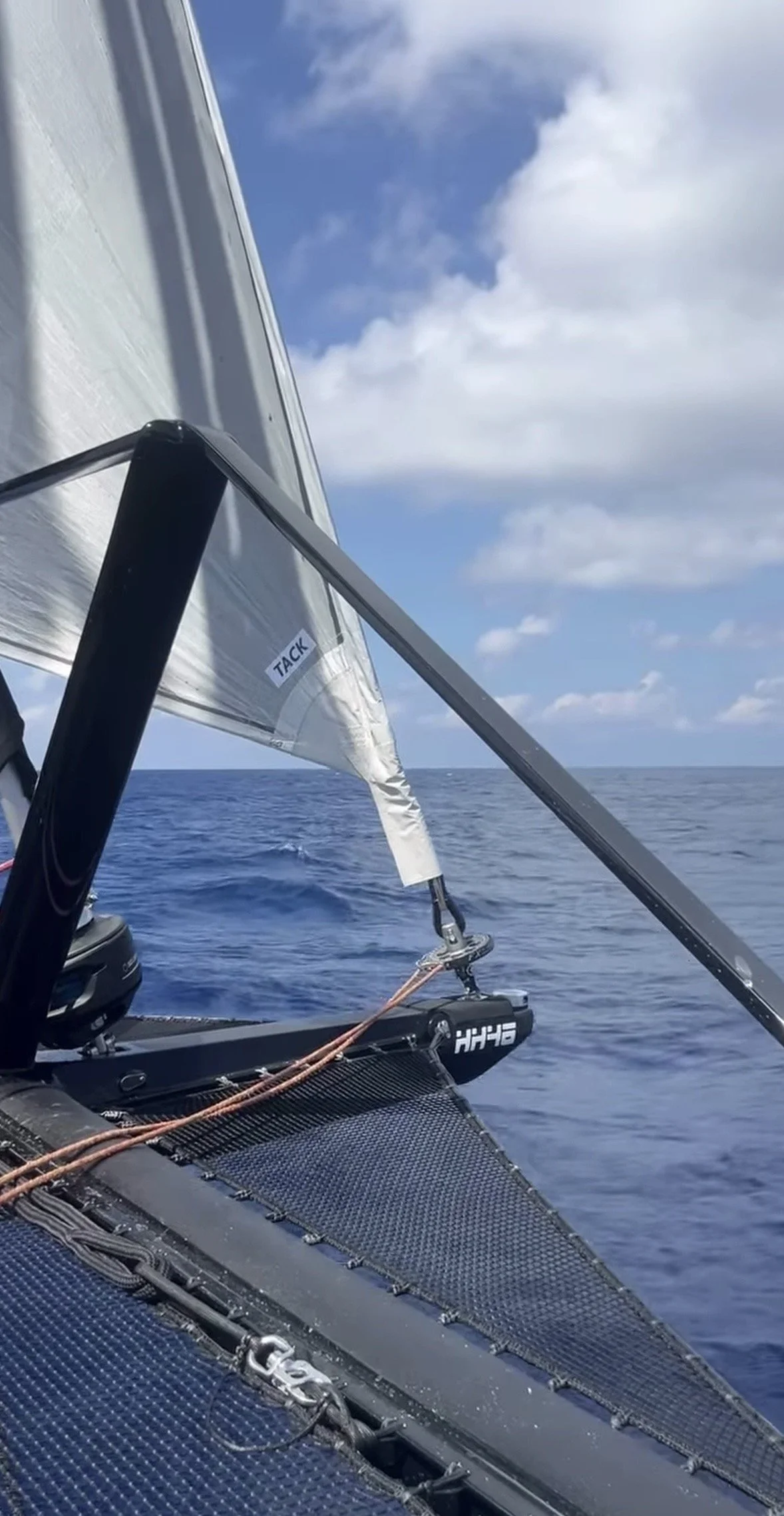
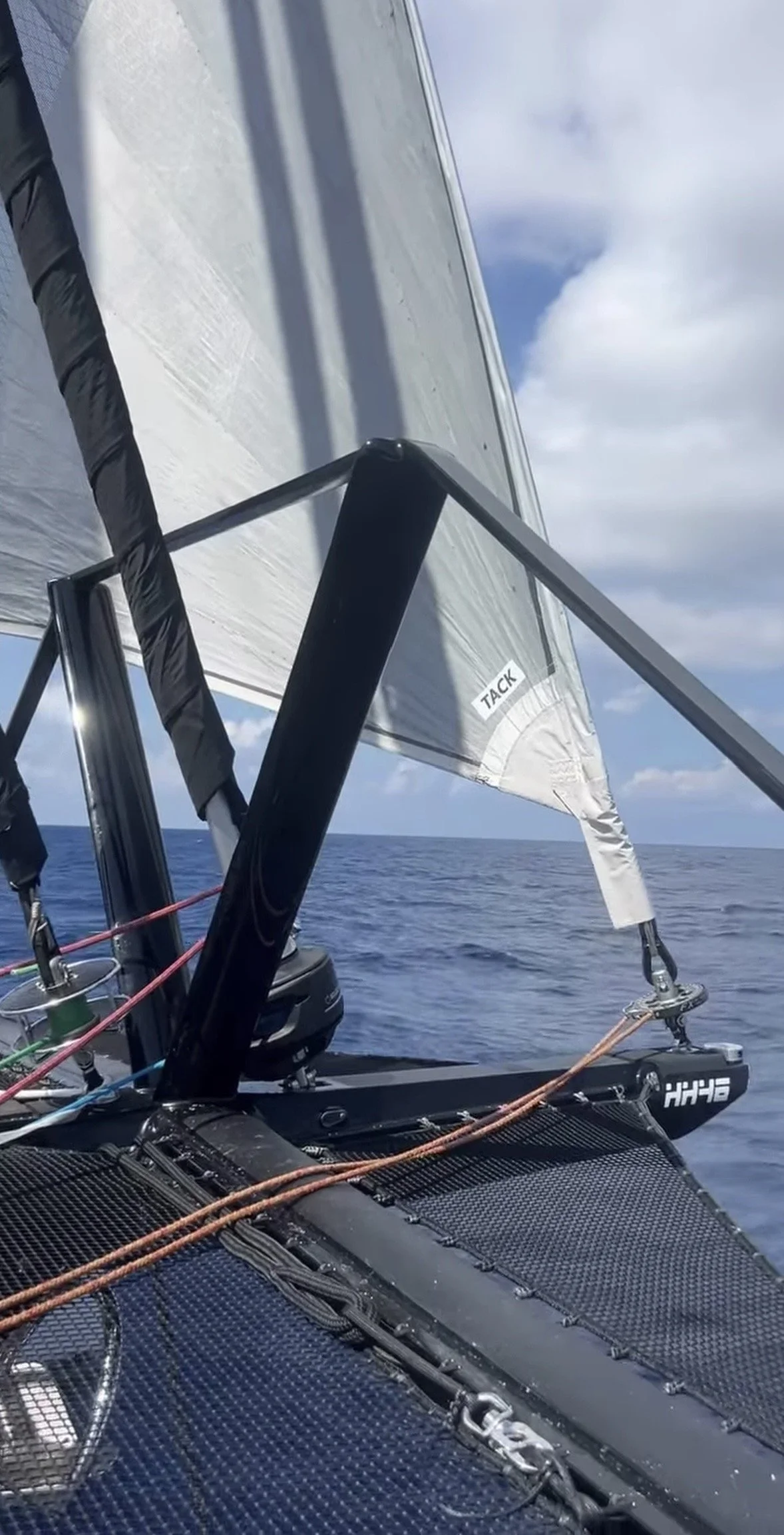
During the first several days, we frequently sailed with the Reacher and a full mainsail or with a single reef. The Reacher performed noticeably better when paired with one reef in the mainsail.
The Solent became the primary working sail for much of the passage. For deeper angles, the Solent was sheeted outside the shrouds using an additional sheet in a manner like the Reacher setup. This configuration worked surprisingly well.
The staysail also performed remarkably well for its size. We rigged a barber-hauler arrangement to pull the staysail further outboard, improving performance at deeper apparent wind angles.
A top-down furling gennaker would have been a valuable addition for this type of passage.
SUMMARY
This ten-day offshore passage provided an excellent real-world test of HH46-17. Issues that may not become apparent during short sea trials often emerge during extended offshore use, making this voyage particularly valuable from an evaluation standpoint.
The stern extensions and high-aspect rudders appear to represent a significant improvement to the platform. However, the true measure of these modifications will likely become even more evident on the higher-performance daggerboard SC version, where additional efficiency and control should translate into greater overall performance gains.
The larger engines are an excellent upgrade, and the 18-inch Gori props clearly contribute meaningfully to motoring performance. Solar generation capability was also extremely impressive, even while actively sailing offshore.
Overall, this is a highly capable, comfortable, and refined passage making catamaran. The looks of this catamaran are dramatically improved by the extensions over the original tailgate design.
Most impressive is HH Catamarans’ relentless effort to continuously modify, improve, and refine the platform. From what I have observed firsthand, HH Catamarans is building what is objectively the finest catamarans under 50 feet on the planet.